


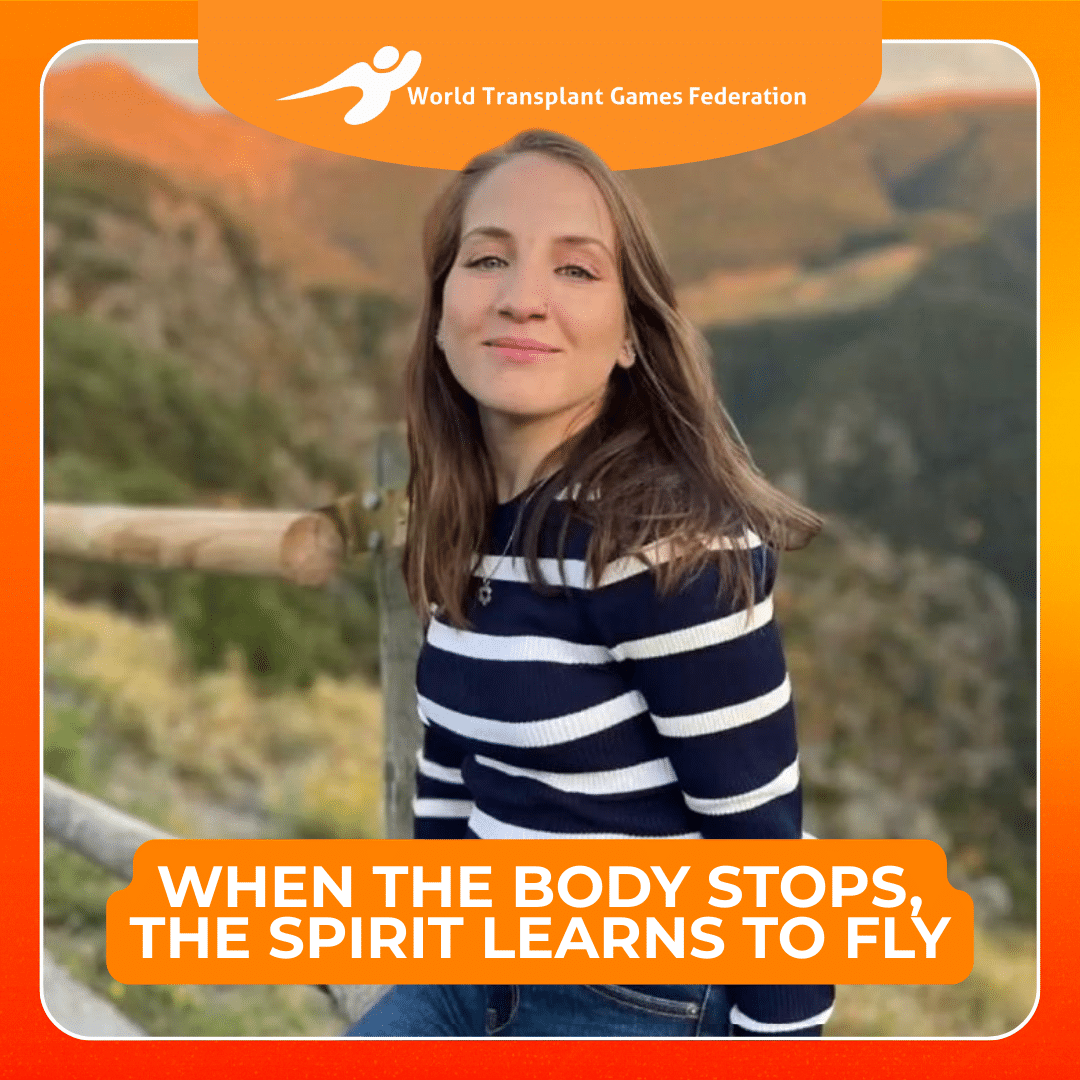
27 Feb Celine de Barros: Four Transplants, One Unbreakable Will
Celine de Barros is 31 years old and lives in Andorra. Her journey began just three days after birth, when she was diagnosed with hepatorenal polycystic disease. From that moment, hospitals became part of her childhood.
At the age of ten, both her kidneys and liver failed definitively. What began as a routine nephrology appointment turned into emergency haemodialysis — and four months later, her first liver and kidney transplant. She spent more than forty days in the paediatric ICU at Vall d’Hebron Hospital in Barcelona.
But the battle was far from over.
The kidney transplant never functioned due to thrombosis. For an entire year, eleven-year-old Celine travelled three times a week from Andorra to Barcelona for dialysis. A second transplant followed, giving her four years of what once felt impossible — a normal adolescence.
At sixteen, chronic rejection led to kidney failure once again. Dialysis returned. This time in Andorra. This time without the shared laughter of other children. Being young and dependent on a machine felt isolating. She felt as though she was watching her youth pass by.
Her third transplant brought seven years of freedom — studying abroad, completing university through Erasmus, travelling and living without visible limits. Then complications returned. Rejection followed. Dialysis resumed. She was 25.
This time, it felt different.
Living independently with her partner, haemodialysis felt like a silent prison — rigid schedules, dependence, returning every 48 hours, and the smallest cruelties, like not being able to drink water during 40-degree summers.
For two years, she struggled deeply.
Until she realised something transformative: she was not deprived of freedom — she was deprived of movement.
And movement, she could reclaim.
She began walking. Hiking in the mountains. Practising yoga at home. Slowly, she found joy again. She shifted her mindset. Instead of waiting for a miracle, she chose to act.
During dialysis sessions, she began seeing the healthcare system through new eyes. She noticed the importance of dignity, individualised care and patient quality of life. That awareness ignited a new purpose.
Celine decided to study nursing.
Balancing university in the mornings with dialysis in the afternoons, she reorganised her treatment schedule so she would not miss a single class. She pushed herself further, completing clinical placements abroad and embracing every challenge.
She stopped waiting — and started building.
Then, on 7 May 2025, just one month before finishing her nursing degree, the phone call came.
Her fourth transplant.
Five years of waiting ended in a moment that restored not only her health, but her freedom. She completed her degree within three years, achieving what once seemed impossible.
Sport has always been her refuge. As a child, rhythmic gymnastics and synchronised swimming. During dialysis, walking, hiking, running and yoga. Even when thirst became unbearable, she learned to overcome it.
Today, nine months after her fourth transplant, she swims three times a week. The hours once connected to a machine are now dedicated to sport. She works as a nurse. She lives independently. She moves freely.
Illness taught her that life does not begin when everything is perfect, but when you choose to live fully with what you have.
Resilience, she says, is not enduring without feeling — it is adapting without losing your essence.
Today she walks. She swims. She cares for others.
And she lives with deep gratitude.
Because even when the body stops, the spirit can learn to fly.